
Janitorial Services for Small Rental Properties: How to Choose

Table of Contents
What Janitorial Services for Small Rental Properties Actually Cover
Recurring janitorial service schedules
Turnover and move-out cleaning scope
Rental Turnover Cleaning Checklist for Small Properties
Turnover coordination and scheduling
Move-Out Cleaning Checklist for Landlords and Property Managers
Apartment Common Area Cleaning Services: Hallways, Laundry, and Shared Spaces
Rental Cleaning Service Cost: What Drives Your Quote
How to compare two quotes fairly
In-house staff vs. a janitorial contractor
How to Vet Janitorial Services Before You Sign a Contract
1. References from clients your size
2. Insurance and licensing
3. A written scope of work
4. A response-time commitment
5. A quality inspection process
The completion standard clause
Change orders and scope changes
Frequently Asked Questions
Last Updated: October 13, 2026
What Janitorial Services for Small Rental Properties Actually Cover
Janitorial services for small rental properties cover the recurring and one-time cleaning tasks that keep a unit rentable: turnover cleans between tenants, scheduled upkeep of shared spaces, and detailed work that protects a security deposit. For a landlord with a handful of units, scope matters more than the label.
At RC Cleaning Services, LLC, the same question comes up every time: what am I actually paying for? The answer depends on which of two jobs you need.
Recurring janitorial service schedules
Recurring service handles the same tasks on a fixed rhythm. A duplex might need a monthly common-area wipe-down; a small apartment building with a shared laundry room needs weekly cleaning and a floor care pass. Most small-property programs run weekly, biweekly, or monthly, and the schedule should match foot traffic, not a generic package.
Daytime coverage matters: hallways, entryways, and laundry rooms get used all day, so an after-hours crew leaves trash and tracked-in dirt sitting for hours. A dependable service locks in a window and holds it.
Turnover and move-out cleaning scope
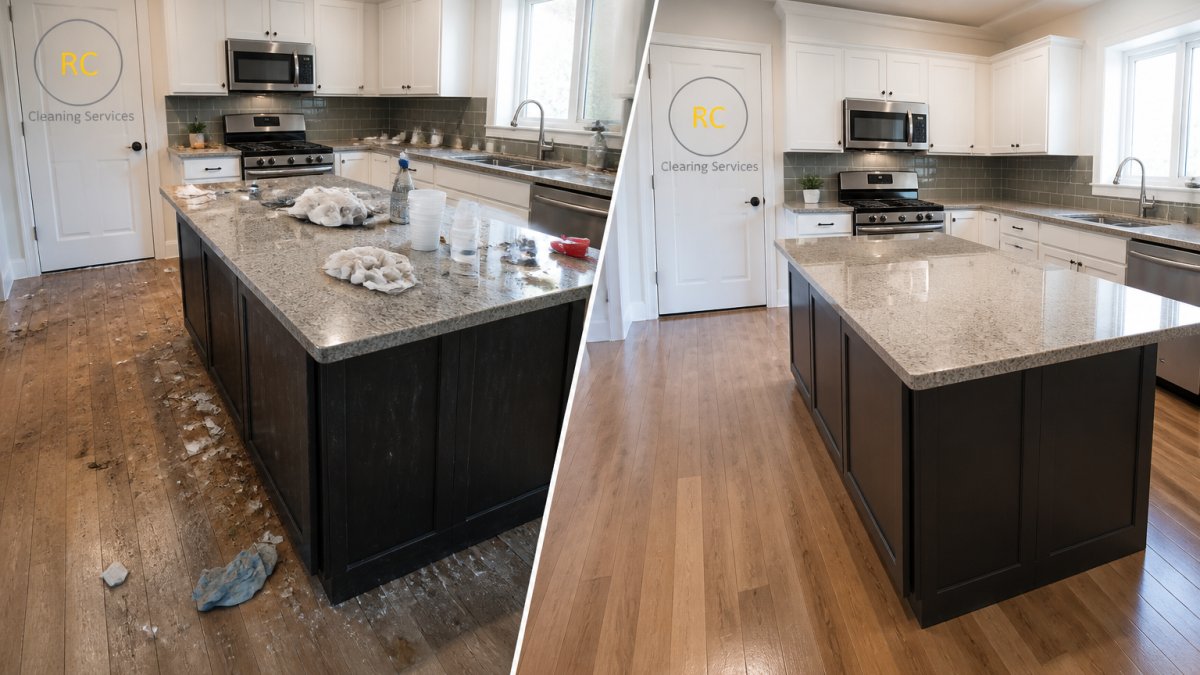
Turnover cleaning is the deep clean between tenants, not recurring upkeep. It covers inside appliances, cabinet interiors, baseboards, blinds, and the spots a walkthrough inspector checks first. Move-out cleaning for a renter recovering a deposit follows a similar scope, from the other side of the lease.
Watch Out Skipping the inside of the oven and the refrigerator drip tray is the most common turnover miss. Those two items alone can cost a landlord a repair charge or a delayed move-in.
Rental Turnover Cleaning Checklist for Small Properties
A rental turnover cleaning checklist is a room-by-room list you run after every tenant leaves, so nothing depends on memory. Small properties benefit most because there is no maintenance staff to catch what a cleaner forgets.

Here is the checklist we hand to turnover crews:
Kitchen: oven interior, stovetop, hood filter, refrigerator inside and out, cabinet fronts and interiors
Bathrooms: toilet base and tank, grout lines, exhaust vent cover, mirror edges, tub and shower surround
Floors: vacuum and mop every room, including closets and under the fridge
Walls and trim: spot-clean scuffs, wipe baseboards, clean switch plates and door handles
Windows: interior glass, tracks, and blinds
Final pass: light fixtures, ceiling corners, and a walkthrough photo set
Turnover coordination and scheduling
Turnover coordination is the part landlords underestimate. A lease ends Friday, the next tenant moves in Monday, and cleaning has to land in that gap without blocking the painter or carpet crew.
Book the clean the moment you know the move-out date. Sequence trades so cleaning happens last, after repairs and painting, or you pay twice for the same dust. A local provider with a set response time beats a crew that cannot confirm a date.
Move-Out Cleaning Checklist for Landlords and Property Managers
A move-out cleaning checklist for landlords differs from a renter's list in one way: you are preparing the unit for the next lease, not arguing over a deposit. That means documenting condition as you go.
Run the same room-by-room list above, then add:
Photograph every room before and after cleaning
Note any damage that cleaning cannot fix, and separate it from dirt
Confirm appliances, outlets, and fixtures work after the clean
Keep a signed completion record for your files
Property managers who standardize this list can cut turnover time and disputes. When the cleaning scope is written down, a renter cannot claim a unit was left dirty, and you cannot be accused of charging for normal wear.
Pro Tip Take dated photos of the empty unit after cleaning, before the next tenant's belongings arrive. If a deposit dispute ever goes to a hearing, that photo set is your evidence, not your memory.
Apartment Common Area Cleaning Services: Hallways, Laundry, and Shared Spaces
Apartment common area cleaning services keep shared spaces presentable: entryways, hallways, stairwells, laundry rooms, mail areas, and trash rooms. These areas shape a prospect's first impression before they ever see a unit.
Shared-space cleaning runs on a different rhythm than unit cleaning. High-traffic entries and laundry rooms need more frequent attention than a stairwell used by four people.
Floor care and surface cleaning do most of the work: vacuuming and mopping hallways, wiping handrails and door hardware, and cleaning laundry appliances and lint traps. For carpeted corridors, periodic deep extraction keeps carpet from looking worn long before it is.
Rental Cleaning Service Cost: What Drives Your Quote
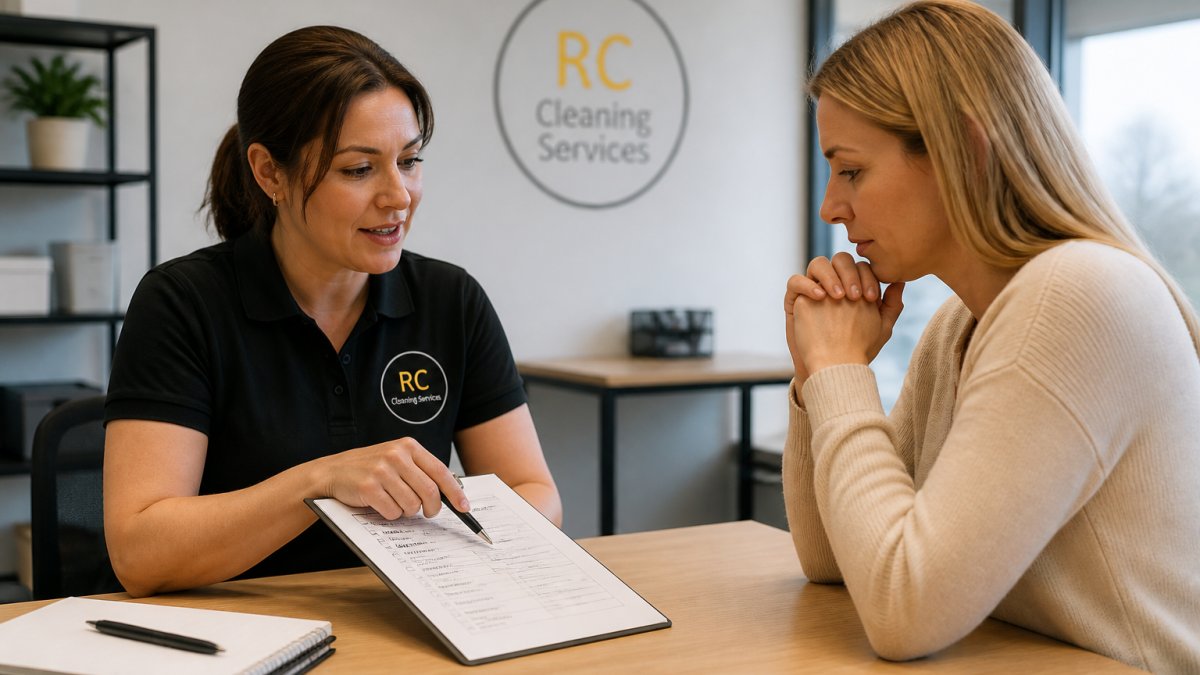
Rental cleaning service cost depends on four things: property size, condition, frequency, and access. At RC Cleaning Services, LLC, we provide accurate project estimates through personal consultations so the scope is clear before anyone starts.
What most quote pages leave out is how each driver moves the number. Here is the mechanism behind each, so you can sanity-check any bid:
Cost Driver | What Changes the Price | Why It Matters |
Property size | Square footage and room count | More surface area, more labor hours |
Condition | Dirt level, pet hair, buildup | Heavy soil needs extra passes and time |
Frequency | One-time vs. recurring service | Recurring work prices lower per visit |
Access | Stairs, parking, key handoff | Hard access adds setup time |
Scope | Basic clean vs. detailed clean | Move-out and turnover take longer |
Size. Labor is the largest line in almost any cleaning bid, and it scales with cleanable square footage, not total square footage.
Condition. Condition is the driver landlords most often underestimate.
Frequency.
Access. Access is the quiet cost driver. Stairs, gated entries, limited parking, and key or lockbox handoffs add setup time that has to be paid for.
Scope. Scope is where quotes diverge most. A basic clean covers floors, bathrooms, and surfaces. A detailed clean adds inside appliances, cabinet interiors, baseboards, blinds, and fixtures.
How to compare two quotes fairly
Put both quotes side by side and check four things: the task list, the frequency, the completion standard, and what is excluded. A lower bid that omits inside-appliance cleaning is not cheaper, it is a different scope. Ask each provider to state, in writing, what is not included. That single question exposes most of the gap between bids.
Ask for the quote in a per-visit and per-task format, not a single lump sum. When the scope is itemized, you can add or drop tasks as your portfolio changes without renegotiating the whole contract.
In-house staff vs. a janitorial contractor
The in-house versus contractor decision comes down to volume and reliability. One or two units rarely justify hiring staff, since you would carry payroll, supplies, and sick-day coverage. A contractor can scale up or down as your unit count changes.
In-house makes sense when you have steady, daily cleaning needs and someone to manage the crew. For most small landlords, a contractor can offer flexibility. A simple break-even test: if your weekly cleaning hours are fewer than the hours it would take to hire, train, schedule, and cover a part-time employee, a contractor might be the lower-cost option once you count your own time.
How to Vet Janitorial Services Before You Sign a Contract
Vetting janitorial services comes down to five checks: references, insurance, a written scope, a response-time commitment, and a quality inspection process. Get all five in writing before you sign. Each check below becomes something you can put in a contract, because a verbal promise is not a standard you can enforce.
1. References from clients your size
Ask for references from clients your size, not just big construction jobs. Call two references and ask three questions: How often was a task missed? How fast did the provider respond? Did the price change mid-contract, and why? The answers tell you more than any brochure.
2. Insurance and licensing
Ask for a certificate of insurance showing general liability coverage and, if the provider has employees, workers' compensation. Confirm the coverage is current and names your property management entity where required. This is a standard request.
3. A written scope of work
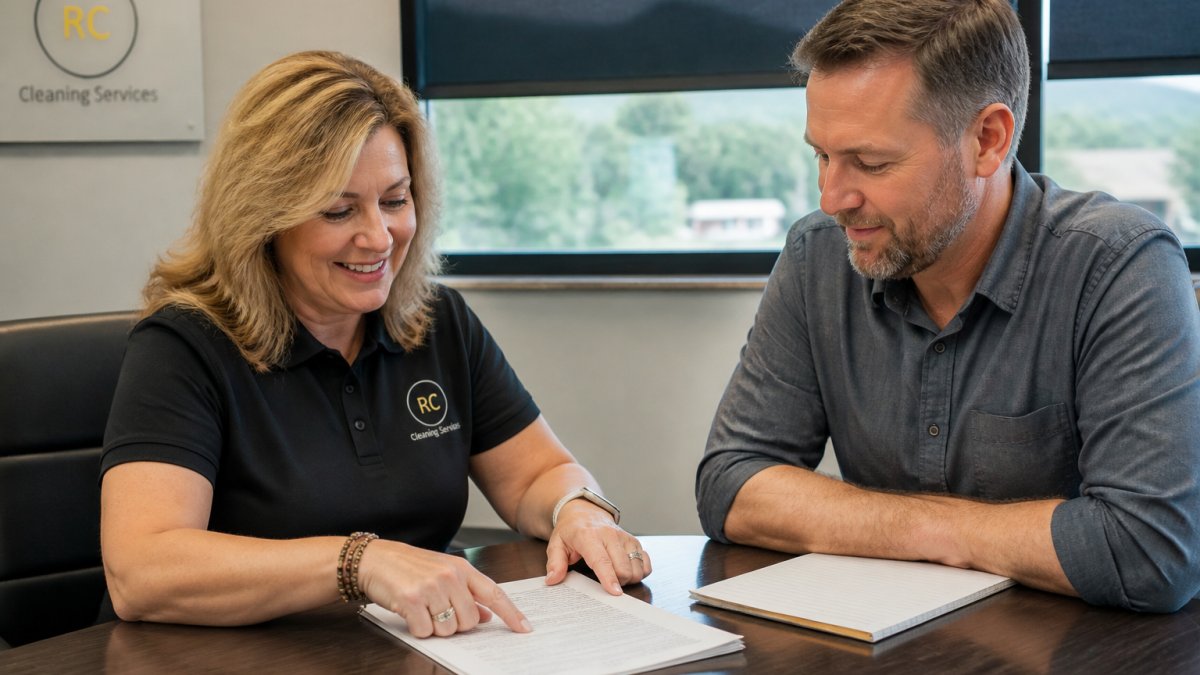
The scope is the heart of the contract. It should list every task, its frequency, and the standard it must meet. A sample scope for a small rental property:
Area | Task | Frequency |
Entry and hallways | Vacuum, mop, wipe handrails and door hardware | Weekly |
Laundry room | Wipe machines, clear lint traps, mop floor | Weekly |
Trash room | Empty bins, wipe surfaces, disinfect | Twice weekly |
Stairwells | Vacuum or sweep, spot-clean walls | Biweekly |
Common windows | Interior glass and tracks | Monthly |
Unit turnover | Full room-by-room deep clean | Per vacancy |
Notice that the scope separates recurring tasks from turnover tasks. That separation matters because turnover work is priced and scheduled differently from routine upkeep. A scope that lumps them together can produce disputes.
4. A response-time commitment
The contract should state how fast the provider returns if a task is missed or a tenant reports a problem. A common pattern is same-day or next-business-day return for missed routine tasks and a defined window for turnover re-cleans. Put the number in the contract, not in a conversation.
5. A quality inspection process
Quality assurance is not a promise, it is a process you can point to. Ask the provider to describe how they inspect completed work, a supervisor walkthrough, a photo log, or a signed completion record, then ask to see a sample. A provider who can show a completed inspection form runs a process.
The completion standard clause
The single most useful clause in a cleaning contract is the completion standard: what "clean" means, how it is inspected, and what happens if a spot is missed. Without it, every dispute is your word against theirs. Write the standard in plain language, for example, "floors free of visible debris and standing moisture; fixtures free of residue; no dust on horizontal surfaces at hand height", and tie it to the inspection process above.
Change orders and scope changes
Your portfolio will change. A unit goes vacant, a tenant adds a pet, a laundry room gets a new machine. The contract should describe how scope changes are requested, priced, and approved. A simple change-order process, written request, written price, written approval before work starts, keeps small additions from becoming billing surprises.
A contract you can enforce has four parts: a task list with frequencies, a completion standard, a response-time commitment, and a change-order process. If any of the four is missing, you are relying on goodwill, not on a service-level agreement.
Then test the response time. If a bathroom is missed, how fast does someone return?
Frequently Asked Questions
Should landlords hire a janitorial service or a move-out cleaning service?
It depends on what you need. Janitorial services handle recurring upkeep like hallways, laundry rooms, and shared bathrooms on a weekly or multi-day schedule. A move-out cleaning service handles one-time deep cleans between tenants. Small landlords with a few units often need both: a recurring program for common areas and a turnover clean each time a unit empties. Ask any provider whether they offer both under one agreement so you are not managing two vendors.
How often should common areas in a rental property be cleaned?
Most small properties do well with weekly cleaning of entryways, stairwells, and laundry rooms, plus a deeper floor care pass monthly. Buildings with more than eight units or heavy foot traffic often move to two or three visits a week. Set the frequency by how fast trash, fingerprints, and floor dirt build up, not by a generic rule. Your service agreement should state the frequency, the scope, and the completion standards for each visit.
What does a basic rental property cleaning service include?
A basic service typically covers floors, surface cleaning, trash removal, bathroom fixtures, kitchen surfaces, and dusting of reachable areas. Turnover cleans add inside appliances, baseboards, cabinet fronts, and window tracks. Ask for a written scope of work before you sign. If the quote does not list what is included and what costs extra, you will not know what you are paying for until the walkthrough.
How do I choose a cleaning company for a small rental property?
Start with three questions: Can you show a written scope of work? How do you handle a missed spot or a complaint? What is your response time when something goes wrong? Then ask for references from properties your size, not just large commercial sites. Get a free quote in writing and confirm the completion standards before the first visit.
BOOK ONLINE
Comments