
Best Janitorial Services for Small Offices

Table of Contents
What Makes Janitorial Services Right for Small Offices
How Often Should an Office Be Cleaned
Start With Three Inputs
A Practical Frequency Framework
Daily, Weekly, and Periodic Tasks
After-Hours Access, Keys, and Security
Consistency Beats Frequency
Office Cleaning Checklist: What Professional Services Should Cover
Daily and Weekly Tasks
Monthly Deep-Cleaning Components
Understanding Janitorial Services Cost and What Drives Pricing
The Four Pricing Models You Will See
What Actually Moves the Number
Minimums and Contract Length
How to Read a Bid
Red Flags in Pricing Conversations
How to Vet Providers and Verify Insurance
Office Cleaning Contract Terms You Should Negotiate
Green Cleaning and Product Safety for Small Office Spaces
Guarantee Quality and Handle Service Failures
Frequently Asked Questions
Last Updated: October 12, 2026
What Makes Janitorial Services Right for Small Offices
The best janitorial services for small offices balance affordability and quality. Unlike a Fortune 500 building, you need responsive, flexible service that scales with headcount and avoids enterprise contracts.
Small offices typically have 5-25 employees in 1,000-5,000 square feet. Requirements are simpler than a corporate campus, but standards stay professional.
The right provider offers customized plans, not one-size-fits-all packages, so you don't pay for services you don't need and can adjust frequency or scope as you grow.
How Often Should an Office Be Cleaned
Frequency should be derived from your office, not picked from a menu.
Start With Three Inputs
Headcount. More people means more restroom use, kitchen traffic, and trash. A 5-person and a 25-person office in the same square footage need different schedules.
Client and visitor traffic. Weekly client visits raise appearance standards; a back-of-house office needs hygiene and function, not presentation.
Restroom and kitchen count. These rooms drive the schedule most. One restroom serving 20 people needs daily attention; one serving 5 can be serviced alongside the rest of the office.
A Practical Frequency Framework
Daily (5x per week). For 20+ people on site most days, multiple restrooms, a full kitchen, or daily client traffic. Covers trash, restrooms, kitchen surfaces, and high-touch spot cleaning.
Three times per week. For roughly 10-25 people with moderate visitor traffic; restrooms and kitchen get mid-week attention without a daily crew.
Twice per week. Works for 5-15 person offices with light traffic and one or two restrooms; the most common small-office cadence.
Once per week. For teams under 5, low-traffic offices, or where staff handle daily tidying between visits.
Biweekly or monthly. Reserved for executive suites, satellite offices, or part-week spaces; supplement with staff-managed daily upkeep.
Daily, Weekly, and Periodic Tasks
Tasks fall into three buckets regardless of cadence:
Every visit: trash and recycling, restroom cleaning and restocking, kitchen surface wipe-down, spot cleaning of high-touch points (door handles, light switches, shared keyboards and phones if in scope).
Weekly: vacuuming and mopping all floors, dusting horizontal surfaces, glass and partition cleaning, detail work on baseboards and door frames.
Monthly or quarterly: high dusting, vent and grille cleaning, carpet extraction or shampoo rotation, hard-floor machine work, interior window cleaning.
If a provider quotes a low frequency without listing periodic tasks in the scope, you are buying the every-visit bucket only.
After-Hours Access, Keys, and Security
If your office is cleaned after hours, the provider needs a way in. Options, in order of preference:
Alarm code plus lockbox or keypad. You control and can change the code; no physical key changes hands.
Building-managed access. A front desk or property manager lets the crew in and out. Confirm the building allows it and who is liable if something goes wrong.
Physical key or fob. Workable with a documented handoff, signed key receipt, and a rekeying plan if the relationship ends.
On-site staff during business hours. Avoids key handling but limits the provider to day-porter scheduling, priced differently.
Put access in the contract: who holds it, how it is revoked, and the provider's background-check policy for anyone with a key or code.
Watch Out Do not hand over a key or alarm code until you have a signed agreement that names the individuals authorized to enter and states the provider's insurance coverage for theft or damage.
Consistency Beats Frequency
A twice-weekly service arriving on the same days at the same time outperforms a three-times-weekly service that shows up unpredictably. Ask providers how they handle route changes, substitute cleaners, and holiday weeks.
Key Takeaway Pick the lowest frequency that keeps restrooms and the kitchen hygienic and the space presentable to visitors, then add visits only when a specific input changes: headcount, restroom count, or client traffic.
Office Cleaning Checklist: What Professional Services Should Cover
A comprehensive plan covers daily maintenance, weekly detail work, and monthly deep cleaning. Knowing what should be included helps you judge whether a service delivers value or cuts corners.

Daily and Weekly Tasks
Daily cleaning includes trash removal, restroom sanitizing, and spot-cleaning high-touch surfaces. Restrooms need toilet cleaning, mirror wiping, floor sanitizing, and restocking; break rooms need surfaces wiped, appliances cleaned, and trash emptied.
Weekly tasks expand the scope: vacuum carpeted floors or mop hard surfaces, wipe desks and work surfaces, clean baseboards, door frames, and light switches, and clean windows and glass partitions.
A structured weekly schedule keeps your office polished without staff cleaning during work hours.
Monthly Deep-Cleaning Components
Monthly deep cleaning addresses areas that accumulate grime: baseboards, crown molding, behind furniture, air vents and HVAC grilles, and light fixtures and ceiling areas.
Carpet spot-treating or a quarterly deep shampoo keeps floors fresh. Upholstered furniture, kitchen appliances (inside and out), and walls and doors also need periodic attention.
A quality service includes these tasks in the proposal without upselling them as premium add-ons. Verify that monthly deep tasks are explicitly listed, not vague references to "additional services available."
Understanding Janitorial Services Cost and What Drives Pricing
Most local janitorial pages end pricing with "call for a free quote," which is useless for budgeting. Here is how small-office janitorial pricing is actually built, so you can read a bid instead of guessing.
The Four Pricing Models You Will See
Per square foot, per visit. The most common recurring model because it scales with your footprint: a 2,000-square-foot office cleaned twice weekly is 2,000 sq ft x 2 visits x the rate.
Flat monthly fee. A set scope and frequency bundled into one invoice. Easier to budget, harder to compare unless you compare scope line by line.
Hourly. Common for one-time or deep cleans, move-in/move-out, and post-construction work; less common for recurring contracts because the provider absorbs overrun risk.
Per-task or add-on pricing. Carpet extraction, window washing, high dusting, and floor stripping/waxing are usually quoted separately.
What Actually Moves the Number
Square footage and cleanable area. Usable square footage matters more than total. A 3,000-square-foot office that is 70% open floor plan cleans faster than the same footprint divided into offices and cubicles.
Frequency. Going from once to three times weekly does not triple the price, because travel, setup, and supervision are amortized across visits.
Restroom and kitchen count. These are the most labor-intensive rooms per square foot; two restrooms versus four can swing a bid more than 500 extra square feet of open office.
Floor types. Carpet, VCT, LVT, hardwood, and polished concrete each need different equipment and chemistry; mixed flooring adds time and supply cost.
Access and after-hours timing. Cleaning after 6:00 PM, before 7:00 AM, or on weekends can carry a premium. Day-porter coverage is priced differently again.
Supplies: included or not. Some providers include restroom paper, soap, and liners; others bill them as a pass-through. Consumables can add a meaningful monthly line item.
Local labor market. Wage pressure in your metro is the biggest driver of price differences between otherwise identical bids.
Minimums and Contract Length
Most commercial janitorial companies set a minimum contract value, often a minimum monthly billing or visits per week. Offices under roughly 1,500 square feet often fall below those minimums and pay for unused time. Two workarounds: accept a lower frequency, such as once weekly, or hire a smaller independent operator with no minimum.
Contract length is a separate lever. Month-to-month and 12-month terms are both common. Longer terms usually buy a lower rate but reduce flexibility if quality slips.
How to Read a Bid
A usable bid answers five questions in writing:
What is the price, and what pricing model is it based on?
What is the exact scope, task by task, and at what frequency?
What is explicitly excluded (and available as an add-on)?
Are supplies and consumables included?
What are the term, cancellation notice, and price-adjustment terms?
If a bid cannot answer those five in writing, it is not a bid.
Pro Tip When comparing two bids, normalize them first. Convert both to a monthly cost, then list the scope side by side. The lower number is often the thinner scope.
Red Flags in Pricing Conversations
A phone quote with no walkthrough or floor plan.
No written scope, only a monthly number.
Pressure to sign the same day to "lock in" a rate.
Refusal to itemize add-ons such as carpet extraction or window cleaning.
A price far below every other bid with no explanation of exclusions.
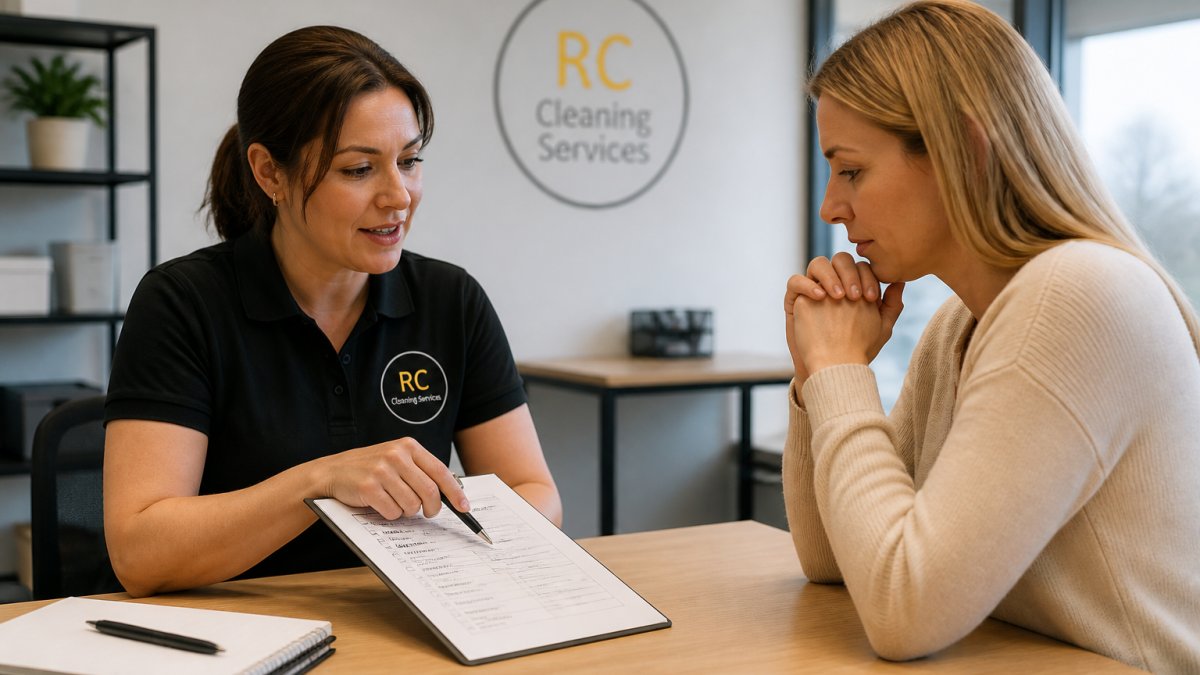
RC Cleaning Services, LLC provides accurate project estimates through personal consultations, so you can see the scope and the price together rather than guessing at either. Request quotes from at least three providers and compare scope before you compare price.
How to Vet Providers and Verify Insurance
Before hiring any janitorial service, verify proper insurance.
Ask for proof directly; a legitimate provider will supply a certificate of insurance without hesitation, and you can verify coverage with their carrier.
Check references from existing clients: how long they've worked with the service, whether the work is consistent, and whether the team shows up reliably.
Interview providers directly about quality assurance, how they handle service failures, and their communication process. A professional provider answers clearly and offers to address concerns quickly.
Office Cleaning Contract Terms You Should Negotiate
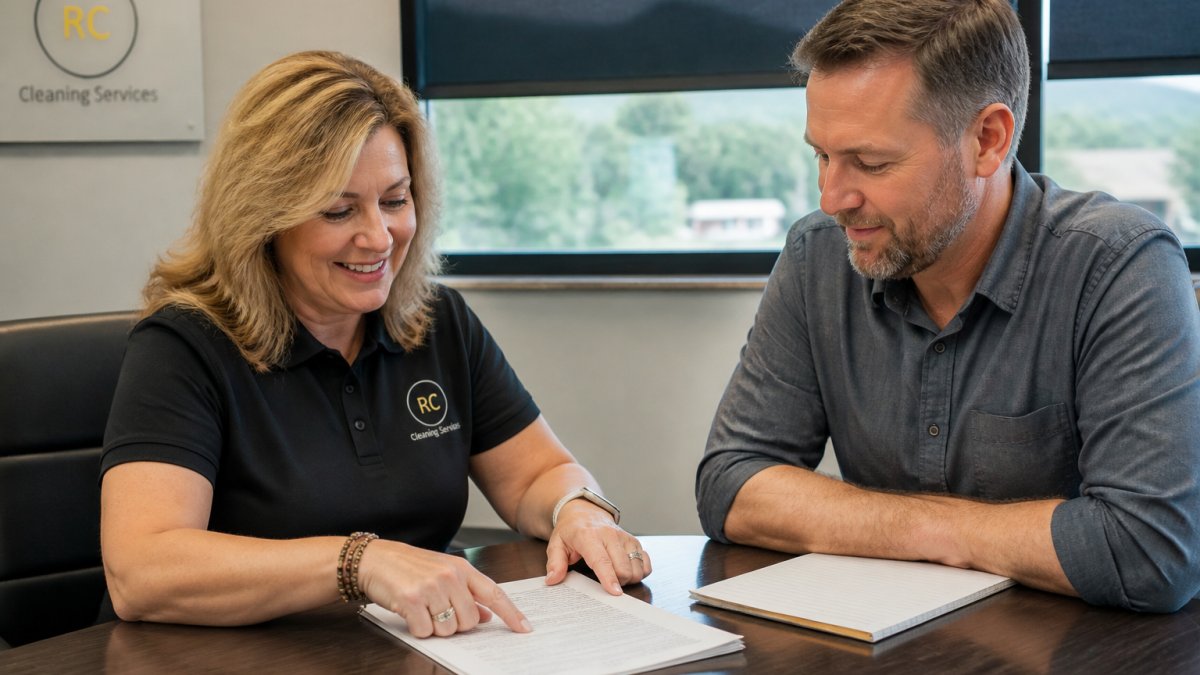
Your contract should specify frequency, scope, pricing, and cancellation terms. Many providers draft contracts in their favor; you don't need to accept unfavorable terms.
Scope should list what's included in the base service and what costs extra.
Pricing should be fixed for a specified period (typically 12 months) unless you agree to adjustments.
Cancellation terms matter: can you terminate with 30 days' notice if service falls short, or are you locked in for a year?
Green Cleaning and Product Safety for Small Office Spaces
Green cleaning, using environmentally responsible products and methods, is now standard practice rather than a premium option.
Eco-friendly products are less toxic to inhale and less likely to irritate skin, which matters in close quarters.
Ask providers about product choices: microfiber cloths (which need less solution), plant-based or biodegradable cleaners, and third-party environmental certifications.
Green cleaning isn't less effective: modern eco-friendly disinfectants meet the same efficacy standards as traditional chemicals without harsh ingredients.
Green cleaning also means responsible storage and disposal.
Guarantee Quality and Handle Service Failures
The best janitorial services for small offices stand behind their work with a clear quality guarantee and a straightforward process for addressing failures.
A typical guarantee: if work doesn't meet standards, contact the provider within 24-48 hours and they return to correct it at no cost, creating accountability and consistent quality.
Communication matters during failures.
Reliable delivery means showing up on schedule every time.
RC Cleaning Services, LLC prioritizes reliable and timely service delivery with rigorous quality assurance.
Finding the right janitorial services for small offices requires balancing cost, quality, and reliability. Contact RC Cleaning Services, LLC to discuss your small office cleaning needs and receive an accurate estimate based on your specific requirements.
Frequently Asked Questions
What should janitorial services include for a small office?
Professional janitorial services for small offices typically include routine cleaning of desks, floors, and restrooms; trash removal; restroom disinfection; and carpet or floor care. A detailed office cleaning checklist should cover daily tasks like sweeping and trash removal, plus weekly deep cleaning of restrooms and monthly tasks like carpet cleaning. Before hiring, ask the provider exactly what's included in their service quote so there are no surprises about coverage gaps.
How often should a small office be professionally cleaned?
Most small offices benefit from professional cleaning two to three times per week, though the ideal frequency depends on foot traffic and employee count. High-traffic areas like restrooms and break rooms may need daily attention, while office spaces with fewer than 10 employees often maintain cleanliness with twice-weekly service. Discuss your specific needs with a cleaning company to create a customized schedule that fits your operations and budget.
How do I choose a reliable office cleaning company?
Look for providers with verifiable insurance, references from similar-sized offices, and a clear track record of on-time service. Ask potential providers about their quality assurance process, whether they offer a satisfaction guarantee, and how they handle service failures. Request an in-person estimate so you can discuss your office layout, special needs, and confirm they're comfortable with your timeline and flexibility requirements.
What questions should I ask before hiring a janitorial service?
Ask about their experience with small offices, whether they provide their own cleaning supplies or you provide them, their cancellation policy, and how quickly they can respond if you need an urgent deep clean. Request details on their insurance coverage, employee background checks, and their process for handling customer complaints. Also clarify the exact scope of work, frequency options, and whether they offer flexible scheduling for after-hours or weekend cleaning if your office requires it.
BOOK ONLINE
Comments