
Commercial Floor Care After Construction: A How-To Guide

Last Updated: October 22, 2026
Quick Summary
Commercial floor care after construction completion is a phased cleaning process, rough clean, light clean, and final clean, that removes construction dust, debris, and residue without damaging new flooring. Schedule the final clean after the HVAC system has run at least once with new filters, and always confirm cure status before any wet cleaning.
Floors come fourth in the cleaning sequence, not first, so ceilings and walls are done before them.
Use HEPA-filtered vacuums, never shop vacuums with standard filters, to capture fine drywall dust.
Confirm adhesive, grout, sealant, and coating cure windows before introducing any water.
Match pH-neutral cleaners to new resilient, stone, and wood finishes; test solvents in an out-of-sight corner first.
Photograph the floor under specified lighting before and after the final clean to settle disputes.
Table of Contents
What Commercial Floor Care After Construction Completion Involves
The Three Phases: Rough Clean, Light Clean, Final Clean
Post-Construction Cleaning Checklist for Commercial Spaces
Dust Control and HEPA Vacuuming: Removing Construction Dust and Drywall Dust
Commercial Floor Cleaning Methods by Flooring Type
Readiness Checks Before Any Wet Cleaning
Floor-by-Floor Procedures and Prohibited Methods
Matching Cleaners to Finish Compatibility
How to Remove Paint Spills From Commercial Flooring
Protecting Floors From Scratches and Damage During Cleanup
When to Bring In a New Construction Floor Cleanup Service
Quality Assurance and Handover: Your Final Inspection
Measurable Pass/Fail Criteria
The Handover Walkthrough Sequence
Documentation and Sign-Off
Frequently Asked Questions
What Commercial Floor Care After Construction Completion Involves
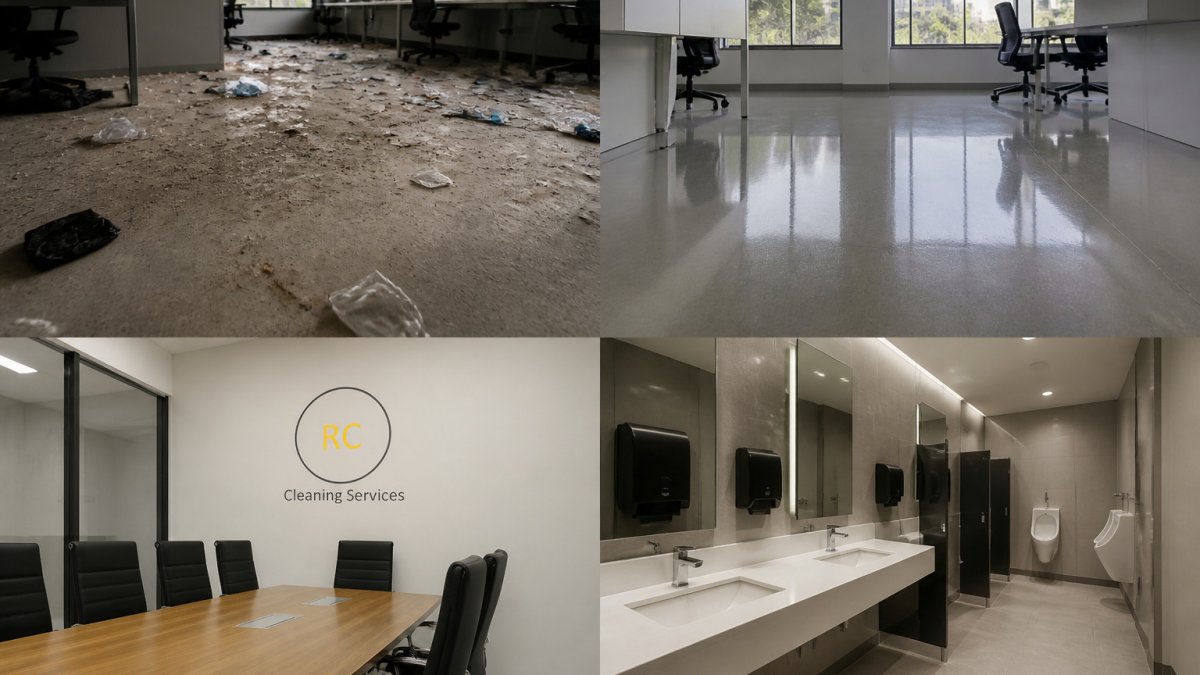
Commercial floor care after construction completion is the phased cleaning process that turns a job site into a move-in-ready space, removing construction dust, debris, and residue without damaging new flooring.
The Three Phases: Rough Clean, Light Clean, Final Clean
Rough clean: Pull out bulk debris, scrap material, and packaging. Happens while trades are still finishing.
Light clean: Remove the bulk of construction dust and drywall dust. Usually after the mechanical, electrical, and plumbing rough-ins are done.
Final clean: Detail work, touch-up cleaning, and a last pass right before handover.
Pro Tip Schedule the final clean after the HVAC system has run at least once with new filters. Airborne dust that settles after your last mop will undo hours of work.
Post-Construction Cleaning Checklist for Commercial Spaces
A post-construction cleaning checklist for commercial spaces should move top to bottom and dry to wet, so you avoid re-contaminating finished surfaces. Here is a common sequence:
Remove all bulk debris and scrap
HEPA vacuum ceilings, vents, and light fixtures
Wipe down walls, ledges, and window frames
HEPA vacuum all floor surfaces
Damp mop hard floors with a pH-neutral cleaner
Detail clean corners, edges, and grout lines
Touch-up cleaning after other trades leave
Final inspection walkthrough
Floors come fourth, not first, cleaning them before ceilings and walls means doing them twice.
Dust Control and HEPA Vacuuming: Removing Construction Dust and Drywall Dust
Removing construction dust and drywall dust starts with containment, not cleaning. Fine particles stay airborne for hours, so capture them before they settle on cleaned surfaces.
Drywall dust is finer than general construction dust and clogs standard filters fast.

What works in practice:
Use HEPA-filtered vacuums, never shop vacuums with standard filters
Seal off return air grilles before dry cleaning begins
Vacuum, then damp wipe. Sweeping drywall dust just moves it around
Watch Out Sweeping drywall dust with a push broom sends fine particles back into the air and onto freshly cleaned surfaces. It also spreads a thin film across the whole floor that shows up under final inspection lighting.
Commercial Floor Cleaning Methods by Flooring Type
Commercial floor cleaning methods by flooring type vary because each material reacts differently to water, pH, abrasion, and cure time. The wrong cleaner or pad can etch, stain, or dull a new floor before anyone moves in, and can void a manufacturer warranty.
Always check the manufacturer instructions and warranty terms before you start. Some new finishes require specific products to keep coverage valid. The EPA's guidance on safer cleaning products is a useful starting point for choosing low-risk solutions.
Readiness Checks Before Any Wet Cleaning
Before introducing water, confirm the floor is ready, cleaning too early traps moisture under adhesive, grout, or coating.
Adhesive-set floors (LVT, vinyl plank, carpet tile): confirm the adhesive has cured per the manufacturer's full-cure window; wet cleaning too early can lift edges and trap moisture.
Grout and stone: confirm grout and sealant have cured before wet cleaning or scrubbing. Fresh grout is soft and releases sand and pigment under agitation.
Resilient coatings and sealers: confirm the coating has reached full cure before burnishing, scrubbing, or applying solvent. Burnishing a green finish can haze or burn it.
If you cannot confirm cure status, dry-clean only and schedule the wet pass for after the cure window closes.
Floor-by-Floor Procedures and Prohibited Methods
Concrete (sealed or polished). HEPA vacuum, then damp mop with a pH-neutral cleaner.
LVT and vinyl plank. HEPA vacuum, then damp mop with a pH-neutral, no-rinse cleaner.
Sheet vinyl and VCT. Damp mop with pH-neutral cleaner, then rinse.
Ceramic and porcelain tile with grout. Agitate grout lines with a soft brush, then rinse thoroughly.
Carpet and carpet tile. HEPA vacuum, then spot treat.
Floor Type | Method | Key Risk | Prohibited |
Concrete (sealed/polished) | HEPA vacuum, damp mop, pH-neutral | Dust drawn back out of pores | Acids; indoor pressure washing |
LVT / vinyl plank | HEPA vacuum, damp mop, no-rinse pH-neutral | Water at seams lifts planks | Steam; abrasive pads; solvent dwell |
Sheet vinyl / VCT | Damp mop, rinse | Cleaner residue blocks finish | Strippers before finish spec |
Tile and grout | Scrub grout, rinse | Residue in grout lines | Acid on fresh grout; metal scrapers |
Stone | Stone-specific pH-neutral, microfiber | Etching and dulling | Acids on marble/limestone/travertine |
Hardwood / engineered | Barely damp mop, dry immediately | Water damage at seams | Steam; oil soap on urethane |
Carpet / carpet tile | HEPA vacuum, spot treat | Over-wetting new carpet | Extraction before adhesive cure |
Watch Out A cleaner that is safe on one floor in a building can damage another floor ten feet away. Label buckets and pads by floor type, and never carry a mop from a tile area onto hardwood or stone without changing the head.
Matching Cleaners to Finish Compatibility
Finish compatibility is the deciding factor, not cleaning power. Three rules cover most of the risk:
Match pH to the finish, not the soil. pH-neutral covers most new resilient, stone, and wood finishes. Alkaline cleaners are for grease and heavy soil and can dull or strip finish. Acidic cleaners are for mineral deposits and are prohibited on stone and fresh grout.
Match the pad to the finish. Soft microfiber for polished and coated surfaces; a white or red pad at most on new resilient; never a black pad or stripping brush on a newly finished floor.
Match dwell time to the label. Solvents and concentrated cleaners left to dwell on vinyl or sealed wood can soften the finish permanently. Wipe quickly and rinse with clean water.
When in doubt, test in an out-of-sight corner and record the product, dilution, and result in the job file, that record protects you if a finish fails after handover.
How to Remove Paint Spills From Commercial Flooring
To remove paint spills from commercial flooring safely, match the method to the paint type and floor material. Water-based paint comes up with warm water and a plastic scraper while soft. Cured or oil-based paint needs a solvent, and that is where floors get damaged.
Work through it this way:
Test any solvent in an out-of-sight corner first
Soften cured paint with a damp cloth before scraping
Use plastic scrapers, never metal, on tile and vinyl
Watch Out Solvent spills left sitting on vinyl or sealed wood can soften the finish permanently. Wipe solvent off quickly and rinse with clean water right after.
Protecting Floors From Scratches and Damage During Cleanup
Protecting floors from scratches during cleanup comes down to three habits: control grit, move equipment carefully, and cover what you are not cleaning yet. Most damage on new floors happens during the clean itself, not construction, dragging equipment across finished floors grinds trapped grit into a new surface.
Lay floor covering on finished areas before moving carts or ladders
Use felt pads under equipment feet and furniture legs
Lift, do not drag, anything heavy
When to Bring In a New Construction Floor Cleanup Service
Bring in a new construction floor cleanup service when the timeline is tight, floor materials are varied, or your crew is stretched across trades. A dedicated team also brings commercial equipment and dust controls most general crews lack. At RC Cleaning Services, LLC, we handle new commercial construction cleanup and final construction cleaning. Through personal consultations, we provide accurate project estimates.
Signs it is time to call:
Your punch list is growing faster than your crew can clear it
Multiple floor materials need different methods
The handover date is fixed and close
Quality Assurance and Handover: Your Final Inspection
Quality assurance and handover is where you verify the work against a written standard, not a visual glance. Walk the space under the lighting occupants will actually use, at the time of day they will use it, a floor that passes under work lights can fail under daylight or the owner's specified fixture temperature.
Measurable Pass/Fail Criteria
Define each line in the scope document before the final clean starts, so handover is a checklist, not an argument. A practical standard most commercial teams can defend:
Dust film: no visible film on any hard floor viewed at a low angle under the specified lighting. Wipe-test a one-square-foot area with a white cloth; no gray transfer.
Residue and streaking: no mop streaks, cleaner haze, or white film on tile, stone, or sealed concrete. Streaking is usually a dilution or rinse problem.
Grout lines: free of residue and loose sand. Run a finger along a sample; no grit should transfer.
The Handover Walkthrough Sequence
Run the walkthrough in the same order every time:
Lighting check. Turn on the lighting occupants will use; if daylight is primary, walk during daylight hours.
Perimeter pass. Check every wall line, column base, and casework toe-kick for dust and residue.
Open-floor pass. Check for film, streaks, and slip hazards across walkways.
Detail pass. Check grout lines, expansion joints, thresholds, and floor drains.
Air pass. Confirm vents and grilles are clean and reseated, and HVAC filters were changed after the last dusty trade.
Documentation pass. Photograph each deficiency, log it, and assign a re-clean date before sign-off.
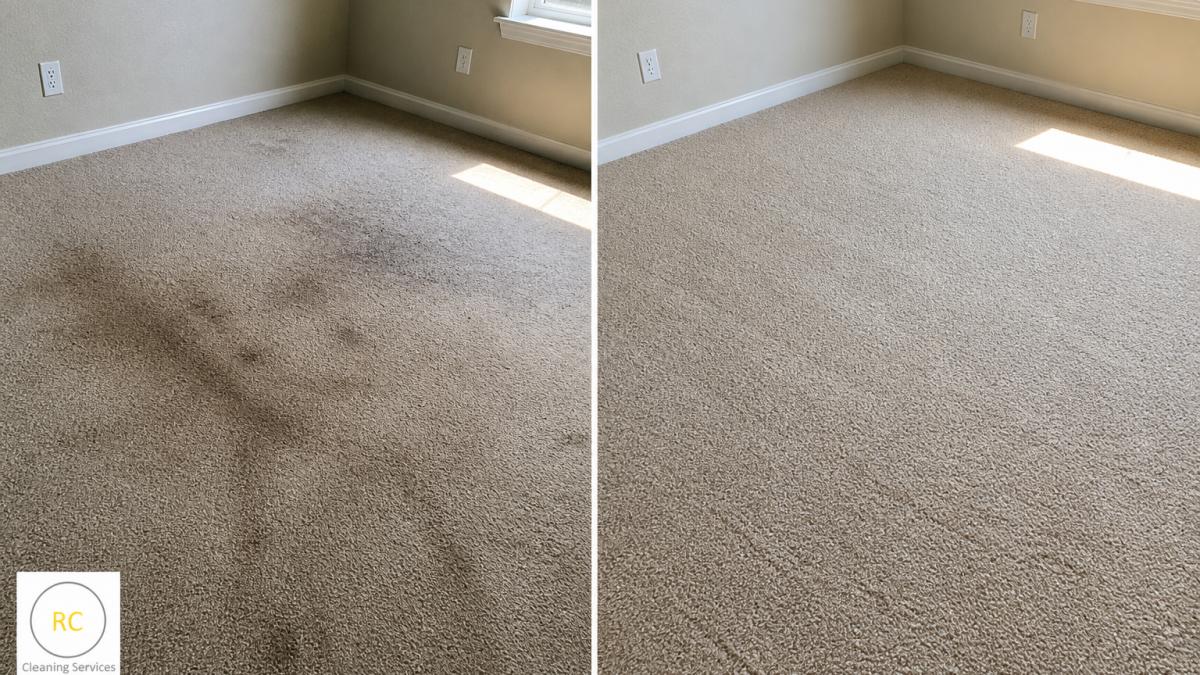
Pro Tip Photograph the floor under the specified lighting before the final clean and again after. The before/after pair is the fastest way to settle a dispute about whether a mark was pre-existing or introduced during cleaning.
Documentation and Sign-Off
Put the standard in writing and attach it to the scope. The ISSA cleaning industry standards offer a useful framework for defining what "clean" means in writing.
A handover that passes on paper and on the floor is the whole point of phased commercial floor care after construction completion. Each phase has a clear finish line, and the final inspection proves you reached it.
Frequently Asked Questions
How do you clean commercial floors after construction?
Start with a rough clean to remove large debris, then HEPA vacuum all dust and fine particles before any wet cleaning. Use a pH-neutral cleaner and damp mop, working from the farthest corner toward the exit so you do not track dirt back over clean areas. Match your method to the flooring type, follow the manufacturer's instructions for newly installed flooring, and finish with a touch-up clean and final inspection before handover.
How do you safely remove paint spills from commercial floors?
Identify the paint type and floor material first. For water-based paint on tile or sealed hard floors, soften with warm water and a plastic scraper, then wipe with a pH-neutral cleaner. For oil-based or cured paint, use a floor-safe solvent matched to the material and test it in a hidden spot. Never use metal blades or aggressive solvents on vinyl, laminate, or coated concrete, as they can scratch or dull the floor finish.
When should commercial floors be cleaned after construction?
Schedule floor care after all trades have finished and dust-generating work is complete, but before furniture and fixtures go in. This usually means a rough clean during the final construction phase, a light clean once the site is secure, and a final clean within days of occupancy. Cleaning too early means dust settles again; cleaning too late risks damage from foot traffic and leftover debris.
Can you use a floor scrubber on newly installed flooring?
Only after the flooring manufacturer's curing or adhesive-set window has passed, and only with the pad and pressure the manufacturer specifies. Auto-scrubbers are efficient on sealed concrete, tile, and resilient floors, but aggressive brushes or high pressure can damage new grout, fresh finish, or carpet edges. Check the manufacturer instructions, test a small area, and use a HEPA vacuum and damp mop first to remove grit that could scratch under the machine.
A construction handover date does not move, and neither should your cleaning schedule. RC Cleaning Services, LLC provides new commercial construction cleanup with accurate project estimates from a personal consultation, reliable and timely delivery, and quality assurance checks before handover. Get started with RC Cleaning Services, LLC and walk into your final inspection with floors that pass the first time.
BOOK ONLINE
Comments